On the Lower East Side, located on adorable Orchard Street, New Yorkers may now visit a new bar and restaurant focused on hard cider. It's called Wassail; a risky name perhaps, because of the association with the winter holidays, but a perfect name also, as it connotes the blessing and celebration of apple trees. A friend who used to live on Orchard Street has been closely watching the progress of this business and after many months' delay this exciting new establishment opened yesterday!
The Village Voice has a review already.
Two Astoria business-owners have teamed up with the Hudson Valley Cider Week organizer, and the result looks like it will be a cider lover's dream, with a dozen ciders on tap, five by the glass, and many, many more available in bottles, hailing from near and far (New York state of course, but also France, Spain, Ireland and Chile, among other places). The food also has an international focus, and is prepared using various ciders from the appropriate regions.
This could not be any more exciting than it already is. Could it? I'll report back when I've had a chance to visit.
The restaurant also has a lovely and informative website.
Could more cider-focused bars and restaurants follow? This is a no-brainer for New York State. Speed the day!!!
Wednesday, March 25, 2015
Saturday, November 15, 2014
Hudson Valley Cider Week!
It's Cider Week in New York!!!
It started yesterday and there seems to be quite a bit happening; the Hudson Valley has become a veritable hub of cider-related shenanigans, and a good thing too, given all the apple orchards hereabouts. Hudson Valley Magazine offers an overview of some of the events happening for Cider Week, and their opinion of the three best local ciders. They mention Aaron Burr which is one of my faves; just cool people and great cider, period. (Photo from their display at Cider Days this year is now my main blog cover photo)
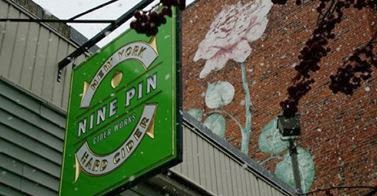
But the magazine doesn't mention Nine Pin, which is near me in Albany and which happens to be having a huge event today, creating a new cider by pressing 80 different varieties of apples! Wow! Plus live music and food trucks. Sounds so fun! I have a busy day but I hope to stop by. Check out the Nine Pin Pressing Party's Facebook Page.
I attended Franklin County Cider Days at the beginning of the month and had a blast tasting heirloom apples, helping with the pouring during the home-brew workshop, and trying some delicious ciders from all over. New faves include West County Cider from Colrain, MA (right near the Cider Days locations), and Citizen Cider of Burlington, Vermont (him elf the craft beer revolution in the Northeast for a long time now).
Saturday, May 17, 2014
Shortage of cider apples? Let's get on that...
The Wall Street Journal reports that craft cider makers are having trouble getting their hands on flavorful cider apples (that means bitter apples that are not necessarily good for eating). Though many commercial hard ciders are fairly sweet, a growing body of cider connoisseurs prefer dry subtle flavors, and only cider apples can provide that. Some brewers are obtaining apples from as far away as France, but others are beginning to grow their own.
I think this sounds like a great entrepreneurial enterprise for anyone with some suitable land who wants to plant some orchards...and the recent state tax incentives in New York make this even more attractive. Some languishing orchards might even be brought back.
Cider apples sometimes require slightly warmer, milder growing zones than other Northeast varieties, so be sure to get trees that will flourish in your climate. As with any apple trees, cider apples are subject to the same pests and problems (I had an heirloom Smokehouse tree planted at my campsite in western New York, that got decimated by fireblight this year). This is a guide to common issues with apple trees in the Northeast. But the good news is, these apples need not be picture perfect (since they're going to be mashed up) and so organic growing methods are easier to implement, and can prove to be a good selling point for your product, as many cideries want to offer organic cider. There are plenty of books (like the classic Organic Orcharding) and websites to show you how to grow your trees using organic practices; organic ciders can obviously position themselves to fulfill a very desirable niche in the market.
So, who's planting an orchard this year? You can buy trees from Trees of Antiquity (order soon, they're shipping to colder regions until the end of May!), including many apple varieties in standard, semi-dwarf and dwarf sizes, listed by hardiness zone, purpose (like making hard cider!), showiness of blossoms (I mean, how great is that?), and timing of harvest. I've gotten a number of trees from them and have been very happy, but be aware that the trees are fairly small and will require winter protection for the first several years, especially if you have deer in your area, as they love to nibble the bark and tender new buds in late winter/early spring. I use lightweight burlap sacks loosely tied with string or tape, as the deer do not enjoy chewing through the fiber, and this allows the tree to get sunlight and moisture until you remove them in the spring.
I think this sounds like a great entrepreneurial enterprise for anyone with some suitable land who wants to plant some orchards...and the recent state tax incentives in New York make this even more attractive. Some languishing orchards might even be brought back.
Cider apples sometimes require slightly warmer, milder growing zones than other Northeast varieties, so be sure to get trees that will flourish in your climate. As with any apple trees, cider apples are subject to the same pests and problems (I had an heirloom Smokehouse tree planted at my campsite in western New York, that got decimated by fireblight this year). This is a guide to common issues with apple trees in the Northeast. But the good news is, these apples need not be picture perfect (since they're going to be mashed up) and so organic growing methods are easier to implement, and can prove to be a good selling point for your product, as many cideries want to offer organic cider. There are plenty of books (like the classic Organic Orcharding) and websites to show you how to grow your trees using organic practices; organic ciders can obviously position themselves to fulfill a very desirable niche in the market.
So, who's planting an orchard this year? You can buy trees from Trees of Antiquity (order soon, they're shipping to colder regions until the end of May!), including many apple varieties in standard, semi-dwarf and dwarf sizes, listed by hardiness zone, purpose (like making hard cider!), showiness of blossoms (I mean, how great is that?), and timing of harvest. I've gotten a number of trees from them and have been very happy, but be aware that the trees are fairly small and will require winter protection for the first several years, especially if you have deer in your area, as they love to nibble the bark and tender new buds in late winter/early spring. I use lightweight burlap sacks loosely tied with string or tape, as the deer do not enjoy chewing through the fiber, and this allows the tree to get sunlight and moisture until you remove them in the spring.
Wednesday, March 19, 2014
New draft cider house opening in Toronto! with an ORCHARD!
Like many places in North America, draft cider in Ontario, Canada has seen a real boost in sales and love recently. A popular traditional beverage for many years in England, draft cider is really only becoming popular in the USA and Canada more recently (although our ancestors drank it in place of water, more or less). Super sweet bottled commercial varieties like Magner's are now being augmented by drier varieties from companies like Angry Orchard (owned by Samuel Adams, the beer brewer in Boston, MA), Woodchuck, and a number of beer makers eager to get in on the cider boom (like Stella Artois which recently introduced its Cidre to rave reviews).
But draft cider is a whole different thing: designed to appeal to foodies and people who like to eat out at bespoke taverns and breweries. Toronto's new Brickworks Ciderhouse will be capitalizing on this growing trend. But what is REALLY exciting is that existing laws require any such establishment (with a retail store) to have five acres of orchard fruit trees in production attached to the property. It will take five years for trees to become productive, so the Brickworks Ciderhouse is currently producing its cider at a local cider. But the CEO Chris Noll is optimistic that an orchard will happen: ""We are currently working with the city to try and make this a reality," he says. "Just Imagine, apple picking in downtown Toronto."
Just imagine! Maybe more cities will follow suit!!! (Albany, NY, are you listening? Maybe Nine Pin Cider can plant some trees along the Hudson...)
But draft cider is a whole different thing: designed to appeal to foodies and people who like to eat out at bespoke taverns and breweries. Toronto's new Brickworks Ciderhouse will be capitalizing on this growing trend. But what is REALLY exciting is that existing laws require any such establishment (with a retail store) to have five acres of orchard fruit trees in production attached to the property. It will take five years for trees to become productive, so the Brickworks Ciderhouse is currently producing its cider at a local cider. But the CEO Chris Noll is optimistic that an orchard will happen: ""We are currently working with the city to try and make this a reality," he says. "Just Imagine, apple picking in downtown Toronto."
Just imagine! Maybe more cities will follow suit!!! (Albany, NY, are you listening? Maybe Nine Pin Cider can plant some trees along the Hudson...)
Tuesday, February 25, 2014
New York State's First Farm Cidery opens in Albany!!
Most excellent news! All Over Albany announces the grand opening of the first farm cidery in New York state, Nine Pin Cider Works! This Friday at 3 pm is the ribbon cutting ceremony and you betcha I will be there!
Following Governor Cuomo's legislation passed last fall, to allow farm cidery licensing in New York state (thereby increasing opportunities for orchardists and brewers to make use of one of New York's best farm products), this cidery is now the first official business venture to light the way.
Did I mention I live in Albany? :-) So I am over the moon. And I look forward to supporting this innovative local business. My fantasy is to open a cider tavern that serves nothing but New York state hard ciders...
Check out their Facebook page and wish them well!
Following Governor Cuomo's legislation passed last fall, to allow farm cidery licensing in New York state (thereby increasing opportunities for orchardists and brewers to make use of one of New York's best farm products), this cidery is now the first official business venture to light the way.
Did I mention I live in Albany? :-) So I am over the moon. And I look forward to supporting this innovative local business. My fantasy is to open a cider tavern that serves nothing but New York state hard ciders...
Check out their Facebook page and wish them well!
Tuesday, January 14, 2014
A Call to Wassail!
Tuesday, January 7, 2014
In Search of the Lost Orchard: Andy Brennan and Aaron Burr Cider
This really great profile from Edible Manhattan writer David Flaherty, on Andy Brennan and his Aaron Burr Cider, is a delight. Brennan's enterprise came about when he wanted to recreate an orchard he loved in childhood in Maryland; it had been razed and he'd been heartbroken. He moved with his wife to the Hudson Valley and bought some land that had about a dozen old apple trees; he planted a few more. A bumper crop of fruit soon after he moved there moved him to press them into cider, it was delicious, and everything clicked.
Brennan's hard work and purist ethic regarding the brewing process (unlike the dubious addition of artificial sweeteners employed by some of the amateur cider makers at Franklin County's Cider Days) makes him a model of craftsmanship in brewing and a visionary in the cider Renaissance. The fact that Brennan was inspired by an orchard he loved and lost is testament to the passion and drive that modern food and farm enthusiasts bring to the table.
I also love that Brennan has the same name as the hapless, gentle sheriff's deputy in Twin Peaks, which celebrates its 25 year anniversary this year...
Brennan's hard work and purist ethic regarding the brewing process (unlike the dubious addition of artificial sweeteners employed by some of the amateur cider makers at Franklin County's Cider Days) makes him a model of craftsmanship in brewing and a visionary in the cider Renaissance. The fact that Brennan was inspired by an orchard he loved and lost is testament to the passion and drive that modern food and farm enthusiasts bring to the table.
I also love that Brennan has the same name as the hapless, gentle sheriff's deputy in Twin Peaks, which celebrates its 25 year anniversary this year...
Saturday, January 4, 2014
Tis the season for Wassailing!
This lodge in England is trying an ancient custom for the first time: wassailing their orchards to bless the apple crop.
Wassailing has undergone a bit of a renaissance in England in recent years,and even a few orchard owners in the US have given it a try. With this winter's harsh cold, it certainly isn't a bad idea to send some positive energy to the apple trees...
This blog has offered some historical background on wassailing before; check it out!
Thursday, June 13, 2013
Johnny Appleseed and the American Orchard
I've been enjoying this Facebook page recently, based upon a book by William Kerrigan published a few months ago, about the history for the orchard in America. The blog "American Orchard" is a wonderful read, including a recent series on orchards during the Civil War. This post on the controversy surrounding cider apples is also fascinating. Really great blog, and I now want to get this book! So check it out.
Wednesday, November 7, 2012
Cider Days 2012
It's been a while; if I've neglected this blog in the last couple of months because my summer was busy: sorry! But I have not been neglecting my love of orchards and apples. I finally got to attend Cider Days in western Massachusetts and had a great weekend. My friends and I rented a house in Shelburne Falls and had a wonderful time together, eating, laughing and relaxing. The weather was a bit chilly but sunny and gorgeous. I used to live in the Pioneer Valley and it was wonderful to go back and enjoy its beauty and progressive approach to life.
There was a marketplace full of crafts and some books. I bought a copy of Taste, Memory: Forgotten Foods, Lost Flavors, and Why They Matter by David Buchanan. I started reading it that same night but too much cider tasting made me sleepy! I plan to review it here soon; it looks to be a fascinating chronicle of the author's adventures growing and preserving forgotten and heirloom plants, including heirloom apples he is growing in Maine.
I attended a workshop on amateur cider making and helped my friend Berta pour and serve samples of homebrew by cider makers whose efforts won them prizes. My favorite was an ice cider made by Steve. It was tart and sweet in equal measure and very flavorful. he questions from the audience were lively and there was a great discussion. Things got a bit heated when the members of the panel recommended using artificial sweeteners (such as Splenda) to "finish" the cider and add extra sweetness. This was really very puzzling and most of my friends were kind of horrified, as was I. One of the panel members even admitted having used aspartame for this purpose! Earlier in the same talk they had stated how important it was to use organic heirloom apples; so I find their recommendation of using artificial sweeteners to be confusing, to say the least. When a number of people asked about this practice and questioned its wisdom, the panel members did seem to get a bit defensive; one of them even responded to my own comments about the toxicity of artificial sweeteners by saying "drinking too much water will kill you." Hmm, perhaps, but it would do it a lot more quickly than dying of cancer caused from ingestion of artificial sweeteners. Not to mention, that stuff tastes nasty. If cider brewing is a celebration of food and flavors, why on earth would anyone want to add chemically-derived sweeteners? This seems very wrong-headed to me. I wonder if this subject will cause any controversy among the home cider brewing community in the future. Even with those eyebrow raising moments, the workshop was enjoyable and fascinating.
After the workshop there was some "tailgating" where amateur brewers share their brews with others from their vehicles. It was fun to taste cider, mead and perry, and meet new friends! There were other workshops, such as one for identifying heirloom apple flavors in cider, but there is only so much you can do (plus the locations of the different events are a few miles away from one another, being spread throughout Franklin County) and my friends and I were happy to relax a bit before the evening.
That night, after a potluck dinner of smoked salmon, chili, ribs, and pizza, my friends and I attended the Cider Salon, a cider tasting event that is the hallmark of this wonderful weekend. The salon is so popular they have to schedule two of them, and they almost always sell out beforehand. Cider Days has been happening for over a decade and the hard cider movement is growing more popular every year it seems. There were ciders from all over the United States, as well as some from France, England, and Spain. One of my favorites was Autumn Gold from Eve's Cidery in Van Etten, NY! I also enjoyed some terrific ice ciders from the award-winning Eden Ice Cider in Vermont (not surprising "Eden" is a popular name for cideries!) I also enjoyed a perry (pear cider) from France, a delicious apricot wine, and a number of other fine beverages. The volunteer pourers did a great job keeping everyone's glasses full and doing their best to answer questions.
I've been trying to go to this event for years but different things always got in the way. I'm now determined to attend Cider Days every year. I highly recommend this wonderful autumn event for anyone who enjoys apples, cider, and enjoying the autumn harvest.
There was a marketplace full of crafts and some books. I bought a copy of Taste, Memory: Forgotten Foods, Lost Flavors, and Why They Matter by David Buchanan. I started reading it that same night but too much cider tasting made me sleepy! I plan to review it here soon; it looks to be a fascinating chronicle of the author's adventures growing and preserving forgotten and heirloom plants, including heirloom apples he is growing in Maine.
I attended a workshop on amateur cider making and helped my friend Berta pour and serve samples of homebrew by cider makers whose efforts won them prizes. My favorite was an ice cider made by Steve. It was tart and sweet in equal measure and very flavorful. he questions from the audience were lively and there was a great discussion. Things got a bit heated when the members of the panel recommended using artificial sweeteners (such as Splenda) to "finish" the cider and add extra sweetness. This was really very puzzling and most of my friends were kind of horrified, as was I. One of the panel members even admitted having used aspartame for this purpose! Earlier in the same talk they had stated how important it was to use organic heirloom apples; so I find their recommendation of using artificial sweeteners to be confusing, to say the least. When a number of people asked about this practice and questioned its wisdom, the panel members did seem to get a bit defensive; one of them even responded to my own comments about the toxicity of artificial sweeteners by saying "drinking too much water will kill you." Hmm, perhaps, but it would do it a lot more quickly than dying of cancer caused from ingestion of artificial sweeteners. Not to mention, that stuff tastes nasty. If cider brewing is a celebration of food and flavors, why on earth would anyone want to add chemically-derived sweeteners? This seems very wrong-headed to me. I wonder if this subject will cause any controversy among the home cider brewing community in the future. Even with those eyebrow raising moments, the workshop was enjoyable and fascinating.
After the workshop there was some "tailgating" where amateur brewers share their brews with others from their vehicles. It was fun to taste cider, mead and perry, and meet new friends! There were other workshops, such as one for identifying heirloom apple flavors in cider, but there is only so much you can do (plus the locations of the different events are a few miles away from one another, being spread throughout Franklin County) and my friends and I were happy to relax a bit before the evening.
That night, after a potluck dinner of smoked salmon, chili, ribs, and pizza, my friends and I attended the Cider Salon, a cider tasting event that is the hallmark of this wonderful weekend. The salon is so popular they have to schedule two of them, and they almost always sell out beforehand. Cider Days has been happening for over a decade and the hard cider movement is growing more popular every year it seems. There were ciders from all over the United States, as well as some from France, England, and Spain. One of my favorites was Autumn Gold from Eve's Cidery in Van Etten, NY! I also enjoyed some terrific ice ciders from the award-winning Eden Ice Cider in Vermont (not surprising "Eden" is a popular name for cideries!) I also enjoyed a perry (pear cider) from France, a delicious apricot wine, and a number of other fine beverages. The volunteer pourers did a great job keeping everyone's glasses full and doing their best to answer questions.
I've been trying to go to this event for years but different things always got in the way. I'm now determined to attend Cider Days every year. I highly recommend this wonderful autumn event for anyone who enjoys apples, cider, and enjoying the autumn harvest.
Friday, March 16, 2012
Warm Spring, Endangered Orchards?
It was a very mild winter in most of the Northeast United States, and the record warm temperatures of the past few weeks have a lot of plants behaving more like it's mid-April, not mid March. Daffodils are blooming, hyacinths and showing color in their buds, and fruit trees are already blossoming in some areas.
This article describes the anxiety some orchardists are feeling about the weather, and how vulnerable trees are. A late frost can kill blossoms and wipe out an entire crop. I've seen this happen in western New York more than once, where the wild apple trees of the Brushwood Folklore Center went two years with practically no fruit.
There is little orchardists can to to protect their trees in this situation. With Northeast winters seemingly becoming milder every year, will this mean problems for orchards and fruit growers? It is a worrying trend.
This article describes the anxiety some orchardists are feeling about the weather, and how vulnerable trees are. A late frost can kill blossoms and wipe out an entire crop. I've seen this happen in western New York more than once, where the wild apple trees of the Brushwood Folklore Center went two years with practically no fruit.
There is little orchardists can to to protect their trees in this situation. With Northeast winters seemingly becoming milder every year, will this mean problems for orchards and fruit growers? It is a worrying trend.
Sunday, February 12, 2012
New apple variety discovered in Australia
An apple grower in Australia has been able to license a new variety known as "Crimson Snow" which is also being test grown in orchards in the United States, Italy and France, and may soon be available throughout Europe and Turkey. Grower Allan McLean says he did not "create" the apple, merely discovered it about ten years ago. It has bright coloring, with vibrant red skin and white flesh reminiscent of the Fameuse or Snow apple first discovered in France. Crimson Snow also has a unique taste and fragrance, and low acid which is increasingly popular among consumers.
How exciting! Consumers do seem to be attracted to these bright red, white-fleshed fairy tale apples, so here's hoping Crimson Snow catches on!
Saturday, February 11, 2012
The Cidery in upstate NY
Though they only became an official winery a short time ago, the Cidery in Wurtsboro, New York is quickly becoming one of the up and coming places for the hard cider renaissance of the Northeast.
They are also one of a growing number of upstate New York wineries making apple and other fruit wines and hard cider, and thereby celebrating and encouraging orchard preservation and the cultivation of heirloom apples!
Wednesday, November 16, 2011
Orchards in the news...
An orchard near Glastonbury, England (part of the Shepton Mallett cider mill) has been cited as being eco-friendly in its efforts to encourage wildlife and encourage sustainable models for planting. I have been to this area (I took this photo in 2002) and it is renowned for its many lovely orchards, and some very delicious locally-produced cider.
Northward in Ireland, the Irish Times published this fascinating article on heirloom apple grafting in County Clare. It's nice to see heirloom apple preservation efforts happening worldwide.
Stateside, orchards in Washington State are desperate for workers to help bring in their apple harvest. Many American orchards are dependent upon migrant and immigrant laborers to harvest their crops. The shortage of workers in Washington is blamed on a late harvest due to unusual weather conditions. In some parts of Washington, prison inmates are being put to work picking apples due to the shortage of civilian workers, and it seems to be working out well for all: the apples are getting picked and the inmates are enjoying some time outdoors.
In other harvest-related news, the apple crop in New South Wales, Australia was decimated by severe hailstorms, and will lead to a spike in prices.
And of course, you have probably already heard about the couple who got lost in an apple orchard who were forced to call 911 to be rescued. At least they were apologetic and somewhat sheepish about it, unlike the folks that got lost in the corn maze...
Wednesday, October 19, 2011
Cider, Cider, Cider
My fellow apple loving pal Rosanna shared this with me, from Mother Jones: resources for learning to make your own hard cider!
It's not easy and is a skill that seems to need some time to hone, but what could be more satisfying than making your own? You could also try making apple wine, which is delicious and somewhat easier. But be sure you get cider that has no preservatives added! Also it's best to get cider that has not been pasteurized, which some farm stands that press their own can make available. I have friends who made their own apple wine from apples, without a cider press, which tasted amazing.
This article offers recipes for using apple cider in marinades for meat: yum!
And here's another recent piece on the Hudson Valley Apple Project, an organization seeking to make hard cider more popular.
It's not easy and is a skill that seems to need some time to hone, but what could be more satisfying than making your own? You could also try making apple wine, which is delicious and somewhat easier. But be sure you get cider that has no preservatives added! Also it's best to get cider that has not been pasteurized, which some farm stands that press their own can make available. I have friends who made their own apple wine from apples, without a cider press, which tasted amazing.
This article offers recipes for using apple cider in marinades for meat: yum!
And here's another recent piece on the Hudson Valley Apple Project, an organization seeking to make hard cider more popular.
Friday, September 16, 2011
Find the Cider!
My friend Rosanna, a fellow lover of orchards and all things appley, found this terrific website: Hudson Valley Cider Route. The site provides a guide to places to buy cider, and the site includes information on orchards who produce and sell sweet and hard cider. The interactive map lets you find an orchard or farm stand near you.
The website was created by the wonderful folks behind The Apple Project, which promotes heirloom apple growing in New York state. There are many, many working orchards in New York, and the Hudson Valley in particular is rich with them. I know an orchard not far from me in Castleton-on-Hudson even has an event with a contest for the best home-brewed hard cider! It doesn't get better than this for those of us trying to keep old foodways alive and celebrate and promote the preservation and revitalization of orchards. So when you're seeking some autumnal pleasure, be sure to include a jaunt or two in search of delicious cider!
Sunday, August 28, 2011
New Moon, Rich Harvest
I haven't posted here in a long time. Sumer solstice and Lammas have both gone by, in fact. It was both a wonderful and a difficult summer. I'm looking forward to the autumn. Classes start tomorrow and my new teaching job begins Tuesday. The apple harvest should be amazing; we're having our annual Heartsong Harvest Festival at Brushwood and after two years in which a late spring freeze killed the blossoms on the wild apple trees, we will have a bumper crop of apples this year, despite a very hot summer and partial drought.
I always enjoy the shift of late summer into autumn, and truly feel summer does not end until the last week of September, regardless of when people stop going to the beach or when school starts. I intend to enjoy the warm weather, dreamy afternoons and pleasant evenings as much as possible in the coming weeks.
This new moon is coming right on the heels of Mercury going direct, so here is hoping it renews our energy and sense of purpose. Now is the time for new ventures but also new approaches to old problems. Seize that summer day!
I always enjoy the shift of late summer into autumn, and truly feel summer does not end until the last week of September, regardless of when people stop going to the beach or when school starts. I intend to enjoy the warm weather, dreamy afternoons and pleasant evenings as much as possible in the coming weeks.
This new moon is coming right on the heels of Mercury going direct, so here is hoping it renews our energy and sense of purpose. Now is the time for new ventures but also new approaches to old problems. Seize that summer day!
Friday, May 13, 2011
Visit to the blossoming orchards
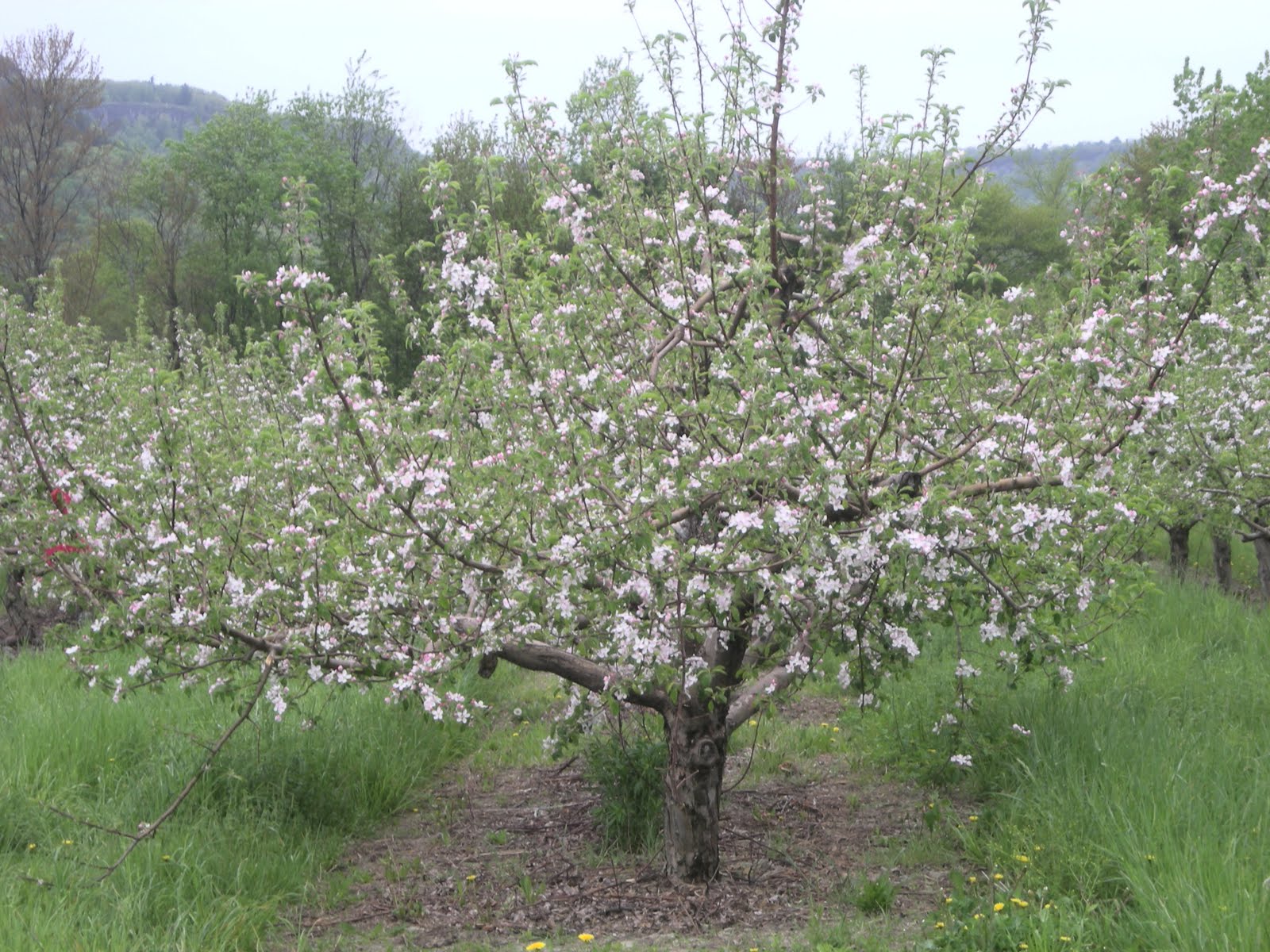
We went to Indian Ladder Farms today. It was cloudy and it rained a tiny bit, but the blossoming orchards were still delightful to behold. We walked around, took photos and bought donuts. Walking in the orchards recharges my soul. The sight of the Helderberg range, awash is subtle shades of spring green, rejuvenates my senses. Even the spraying couldn't sully this day.
(By the way, Indian Ladders uses minimal spraying and integrated pest management for their apples and are known as growers of Eco-Apples)
Tuesday, April 5, 2011
Opal: The Jewel of a Washington Orchard
I've eaten apples called "Opalescent" and they're not only tasty (crunchy and sweet with a touch of tartness) but beautiful to look at. Now a recent introduction from the Czech Republic, which has been growing in Washington State, the Opal, is poised to make one orchard very special, possibly wealthy. The Broetje Orchards have been selling the Opal apples locally and are looking to gain exclusive rights to market it in Washington. Consumers have been willing to pay almost an extra dollar a pound for these beauties. Word of mouth has spread about this delicious apple and in recent months the Opal has also been sampled at Whole Foods markets in Michigan.
Unlike the Opalescent, which is green flushed with red and pink, the Opal is a bright yellow color. It's said to have a very complex flavor, even drawing comparisons to wine. It's a cross between a Golden Delicious (itself a surprise discovery that proved very popular) and a Topaz.
Washington apple growers have been diligently introducing newer varieties to the local markets, some of which have been seen in the Northeast, like Jazz, Pacific Rose and the popular (and premium-priced) Honeycrisp. The Honeycrisp, according to this article, commands high prices not just because it's delicious, but because it requires special care while growing. Honeycrisps are available more widely now, but some Washington growers want to be able to grow and sell varieties unique to them, and new licensing laws are making that possible.
Given the growing interest in reviving heirloom apples, it's exciting to see the same interest aimed at developing new varieties. Whether through discovery (the Granny Smith was found randomly in a New Zealand orchard) or breeding, the introduction of "different" apples is definitely having an impact on the worldwide marketplace.
Friday, March 25, 2011
The Gala: Britain's Most Popular Apple? Say It Isn't So!
Don't get me wrong; I like Gala apples. Sweet, firm, and juicy; they hold up well in winter storage, too, even until spring when the pickings of apples in the grocery store are starting to look sad. But if given a choice, I'll go for an Empire or a Braeburn, or that once-exotic but now pedestrian Granny Smith. These days I am very fortunate to have a year round farmers market with orchardists who have excellent cold storage facilities, and good late season keepers like Winesap (also known as Stayman Winesap) are abundant. Winesaps are an heirloom now being grown more widely; they're crunchy, juicy, fragrant, with slight floral and berry notes and a perfect blend of sweet to tart flavor.
The most popular apple in the United States has been and still is the Red Delicious, despite the fact that most people have never eaten a decent one. At their prime, this apple has dark, sensual notes of wine and maple to its sugary juice, and can be as firm as any of the crispiest varieties out there. But normally it is mushy, bland and insipid.
Britain's most popular apple for many years has been Cox's Orange Pippin, but this story in the Guardian claims that the top apple is now the sweet Gala. The writer goes on to encourage readers to sample Britain's heirloom varieties, some of which have continued to be sold at greengrocers for years, and some of which are slowly being re-introduced on the wave of love for heirloom apples that is also sweeping the Unites States.
The Guardian has published some terrific articles of interest to apple and orchardist enthusiasts in recent years, like this one on cider apples, or this one that suggests that mistletoe may become scarce as its favorite habitat, the traditional country apple orchard, becomes a thing of the past. This writer praises the English apple and all its variety, and this piece bemoans the British trend of importing most of its apples instead of relying on local abundance.
Nature loves diversity, and, as Michael Pollan describes in fascinating prose in his book The Botany of Desire, apple trees reward human intervention on their behalf with sweeter, more delectable fruit. Let's help them along, shall we?
The most popular apple in the United States has been and still is the Red Delicious, despite the fact that most people have never eaten a decent one. At their prime, this apple has dark, sensual notes of wine and maple to its sugary juice, and can be as firm as any of the crispiest varieties out there. But normally it is mushy, bland and insipid.
Britain's most popular apple for many years has been Cox's Orange Pippin, but this story in the Guardian claims that the top apple is now the sweet Gala. The writer goes on to encourage readers to sample Britain's heirloom varieties, some of which have continued to be sold at greengrocers for years, and some of which are slowly being re-introduced on the wave of love for heirloom apples that is also sweeping the Unites States.
The Guardian has published some terrific articles of interest to apple and orchardist enthusiasts in recent years, like this one on cider apples, or this one that suggests that mistletoe may become scarce as its favorite habitat, the traditional country apple orchard, becomes a thing of the past. This writer praises the English apple and all its variety, and this piece bemoans the British trend of importing most of its apples instead of relying on local abundance.
Nature loves diversity, and, as Michael Pollan describes in fascinating prose in his book The Botany of Desire, apple trees reward human intervention on their behalf with sweeter, more delectable fruit. Let's help them along, shall we?
Subscribe to:
Posts
(
Atom
)